

How to Do a Sound Bath at Home: A Simple 20-Minute Routine to Unwind
Disclosure: This article contains one affiliate link and a discount code. If you order through them, DailyPick Journal may earn a commission at no extra cost to you. Prices were last checked on purefrequencies.com (US store, USD) on 17 November 2026. This is general information, not medical advice.
The short version
A sound bath is simply lying still while slow, sustained tones wash over you. You can do one at home tonight with nothing but a quiet room and a recording. If you enjoy it and want something more hands-on, a small set of tuning forks lets you create the tones yourself and feel the vibration too. We explain the routine first, then the tools, including Pure Frequencies sets (10% off with code THANKYOU).
Maybe your evenings look like ours used to: the laptop closes, the phone opens, and an hour later you are still scrolling with a busy head and tight shoulders. You have tried meditation apps, but sitting in silence makes your thoughts louder, not quieter. That is exactly the gap a sound bath at home tries to fill.
Instead of asking you to empty your mind, a sound bath gives your attention something gentle to hold on to: a tone that rings, fades and rings again. Studio sessions with gongs and crystal bowls have become popular in many cities, but they cost money, need booking and end with a drive home. The good news is that the core of the practice is easy to recreate in your bedroom or living room.
This guide starts with the need, not the gear. We cover what a sound bath is, what the research does and does not show, how to set up your space, and a step-by-step 20-minute routine. Only then do we look at which tools are worth buying, and when it makes sense to spend nothing at all.
What is a sound bath, really?
A sound bath is a relaxation session where you lie or sit comfortably while sustained, resonant sounds are played around you. The word “bath” describes the feeling of being surrounded by sound rather than any water. Typical instruments include singing bowls, gongs, chimes, drums and tuning forks.
There is nothing to “do” except listen. You notice a tone begin, follow it as it slowly fades, and come back to the next one. That rhythm of attention and release is what many people find calming. It works a little like a guided meditation without the voice, which suits people who find spoken instructions distracting.
A sound bath is not the same as a sound healing treatment that claims to fix specific conditions. In this article we treat it as what it most reliably is: a structured way to slow down, rest your eyes and switch off from the day. If you are curious about the deeper theory behind specific frequencies, our beginner’s guide to tuning fork sound healing covers it in detail.
What the research says (and doesn’t)
The evidence for sound baths is early but encouraging for mood and tension. The most cited study, published in 2017 in the Journal of Evidence-Based Complementary & Alternative Medicine, followed 62 adults through a singing bowl meditation session. Participants reported less tension, anger, fatigue and low mood afterwards, with the biggest changes among people who had never tried it before.
That study had no control group, so we cannot say how much came from the sound itself versus lying down, resting and expecting to feel better. Other small studies on music and relaxation point the same way, but none prove that a particular frequency treats illness.
Before you start: set up your space
You do not need a dedicated room. You need 20 minutes where nobody will knock, a surface you can lie on, and a few small changes that tell your body this is different from scrolling in bed.
- Pick the spot. A yoga mat, rug or the bed all work. Put a pillow under your knees if your lower back gets tight.
- Lower the light. A lamp or candle instead of the ceiling light. An eye mask helps if your room is bright.
- Get warm. Your body temperature drops when you lie still, so keep a blanket nearby.
- Silence notifications. Put the phone on Do Not Disturb, face down, out of reach if you are using another sound source.
- Set an intention, lightly. Something simple like “let the day go” or “loosen my shoulders”. No pressure to achieve it.
Keep the volume moderate. A sound bath should feel immersive, not loud. If you use headphones, set the level lower than you would for music, because sustained tones can feel more intense than they sound at first.
A simple 20-minute sound bath routine
This routine works with a recording, a single bowl or a set of tuning forks. The timings are guides, not rules. If you are using your own instrument, the same five stages apply: you are just the one making the sound.
1. Settle (0–3 minutes)
Lie down and close your eyes. Take six slow breaths, making each exhale a little longer than the inhale. Let your feet fall outward and your hands rest palms up. Notice where you are holding tension, usually the jaw, shoulders or forehead, without trying to fix it yet.
2. Ground (3–8 minutes)
Start with low, deep tones. With a recording, choose one that opens with gongs or low bowls. With tuning forks, a low weighted fork (around 128 Hz) can be rested on the floor or a wooden surface near your feet, or gently placed on the knee or the sole of the foot so you feel the hum. Pay attention to the vibration more than the sound.
3. Listen (8–15 minutes)
Move to clearer, higher tones. With forks, strike an unweighted fork (such as 256 Hz or 528 Hz) on a rubber puck and slowly pass it a few inches from each ear, never touching the ear itself. Follow each tone until you can no longer hear it, then pause before the next. When your mind wanders, which it will, the next tone is your cue to come back.
4. Rest (15–18 minutes)
Stop making sound. Lie in silence for a few minutes. Many people say this is the part they value most: the quiet feels fuller after the tones. Notice your breathing, your weight on the floor and any change in how your body feels.
5. Return (18–20 minutes)
Wiggle your fingers and toes, roll to one side and sit up slowly. Drink some water. If this is part of your bedtime routine, try to go straight to bed without checking your phone, so the calm carries into sleep.
Making the routine stick
The biggest reason home rituals fail is not the method but consistency. A few habits help:
- Anchor it to something you already do, such as right after brushing your teeth or after closing the laptop for the day.
- Start shorter. Ten minutes three evenings a week beats an ambitious 45-minute plan you abandon after two days.
- Keep the tools visible. A fork case or bowl on the bedside table is a reminder. A recording buried in an app is easy to forget.
- Do it together. One person plays, the other rests, then swap. It turns into a shared wind-down instead of two people on two screens.
- Write one line afterwards. “Slept easier” or “shoulders looser”. After a couple of weeks you will know whether it is worth continuing.
Which tools do you actually need?
Here is the honest answer: to try a sound bath, you need nothing beyond what you already own. Free recordings on streaming platforms are a perfectly good first step. Buy something only if you enjoy the practice and want it to feel more personal and hands-on.
| Tool | Cost | Good for | Trade-offs |
|---|---|---|---|
| Recordings (speaker or headphones) | Free | Trying the practice tonight | Passive; easy to drift back to the phone |
| Single singing bowl | Roughly $30–$80 | One warm, long tone; meditation timer | Takes practice to ring evenly; one note only |
| Tuning fork set | From $49.95 (Pure Frequencies) | Hands-on routine; tones you can feel on the body | Quieter than a gong; best for one person at a time |
| Gongs or full bowl sets | Often $200+ | A full studio-style bath for groups | Expensive, bulky, loud for apartments |
For most people living in apartments or sharing a home, tuning forks hit a sweet spot. They are small, quiet enough not to bother the neighbours, and they let you feel the vibration on your knees, feet or chest, which many people find more grounding than sound alone.
Where Pure Frequencies fits in
Pure Frequencies is a London-based brand that sells tuning fork sets, accessories and short courses aimed at exactly this kind of home routine. According to the brand, its forks are precision-machined from aluminium and tuned to within ±0.5%. Every set we looked at comes in a case with a mallet and an activator puck, which covers everything the routine above needs. With code THANKYOU, you get 10% off at checkout.
Here is how the main sets map to the routine:
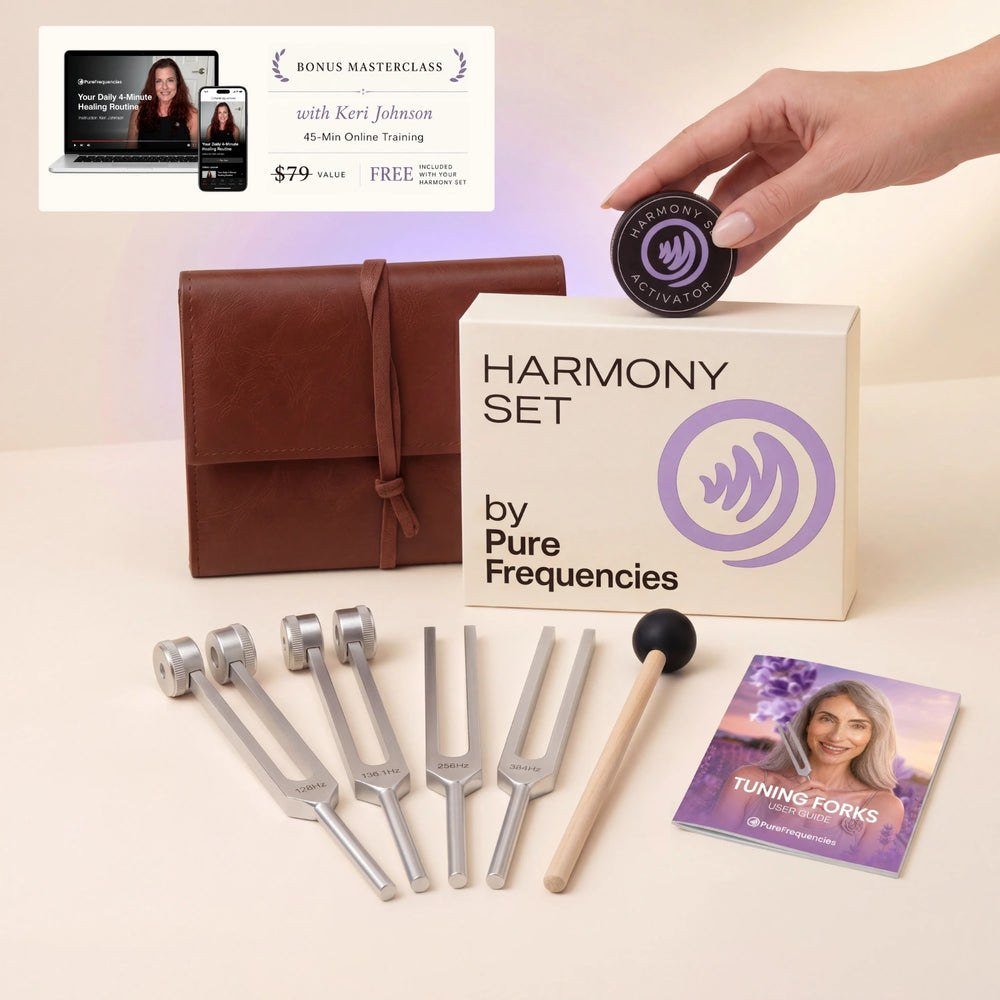
Most complete for the routine
Harmony Tuning Fork Set (4 forks) · $109.95 (list $149.80)
Two weighted forks (128 and 136.1 Hz) for the ‘Ground’ stage on the body, plus two unweighted forks (256 and 384 Hz) for the ‘Listen’ stage around the ears. If you want one set that covers all five stages, this is it.
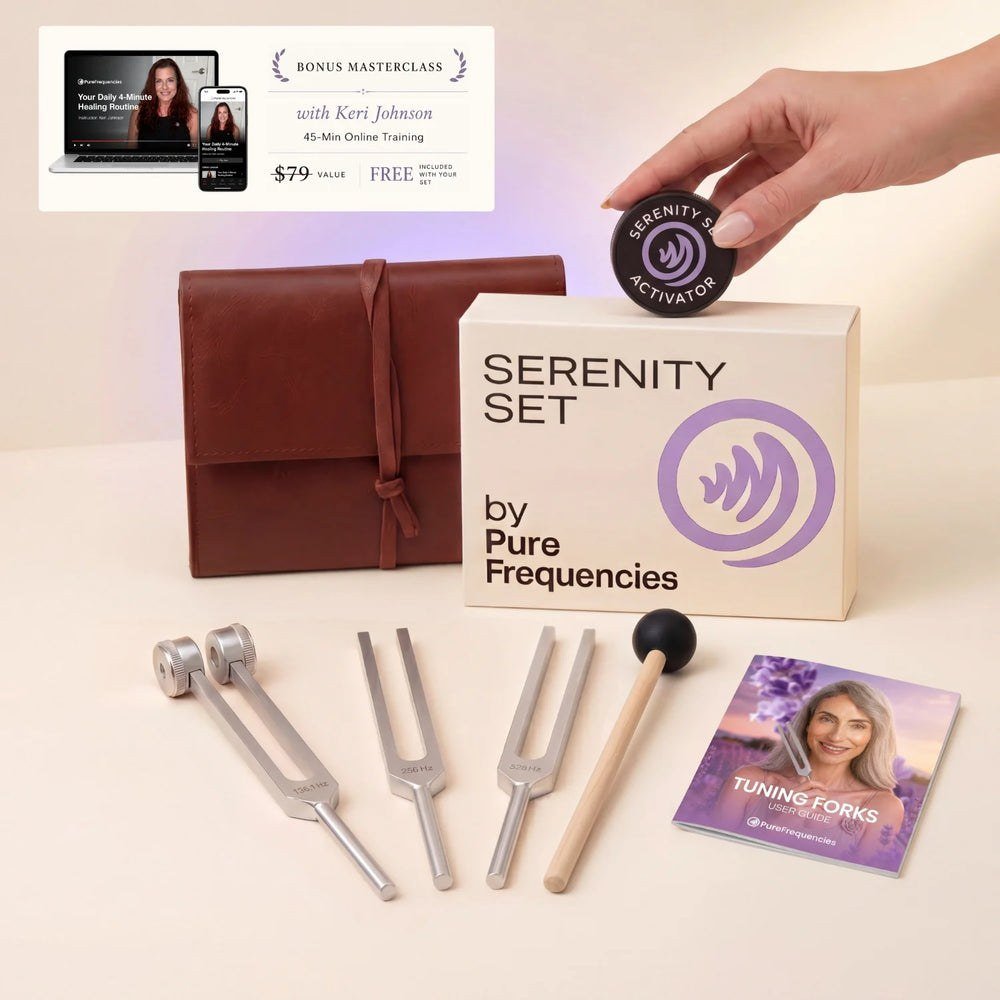
For a listening-focused bath
Serenity Tuning Fork Set (3 forks) · $79.95 (list $109.85)
136.1, 256 and 528 Hz. Leans toward clear tones you listen to rather than vibration you feel, so it suits people who mainly want the calming sound part.
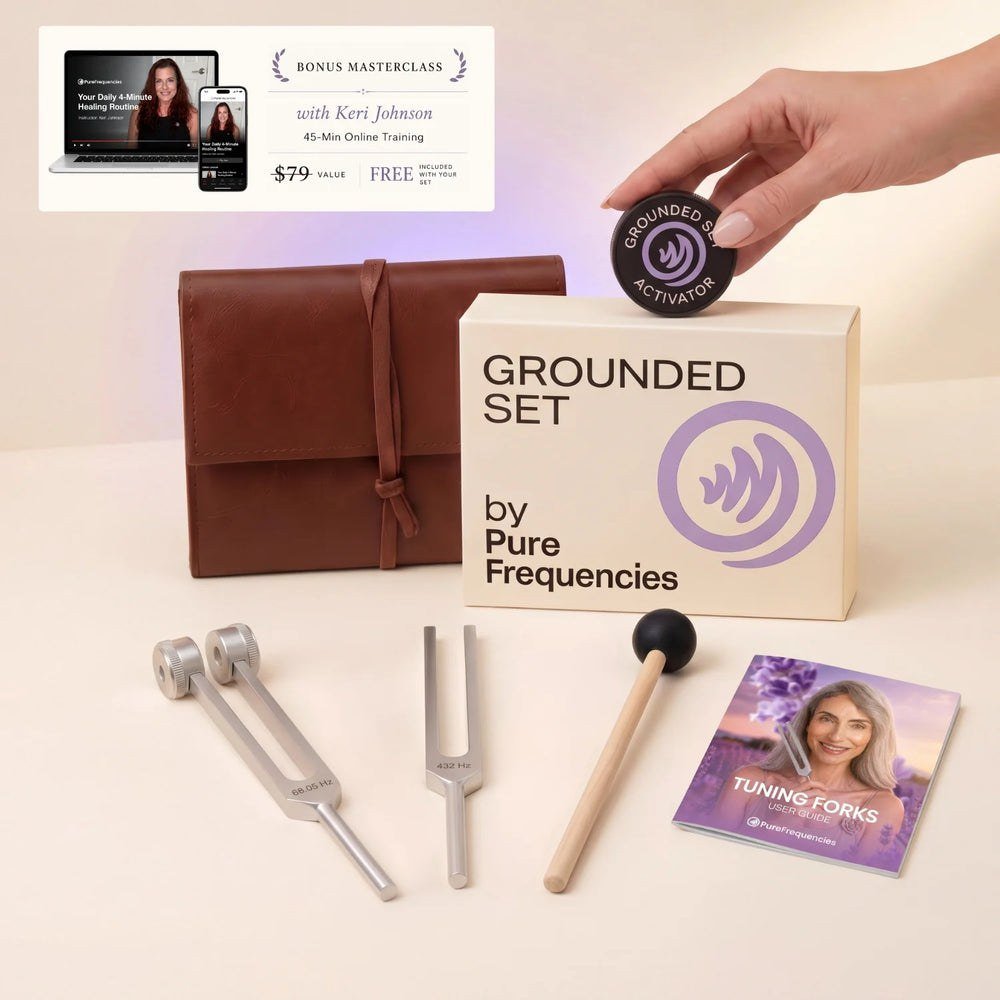
For body-focused wind-downs
Grounded Tuning Fork Set (2 forks) · $64.95
Two weighted forks (68.05 and 432 Hz). Good if your main need is releasing tension in the legs, feet and back before sleep.
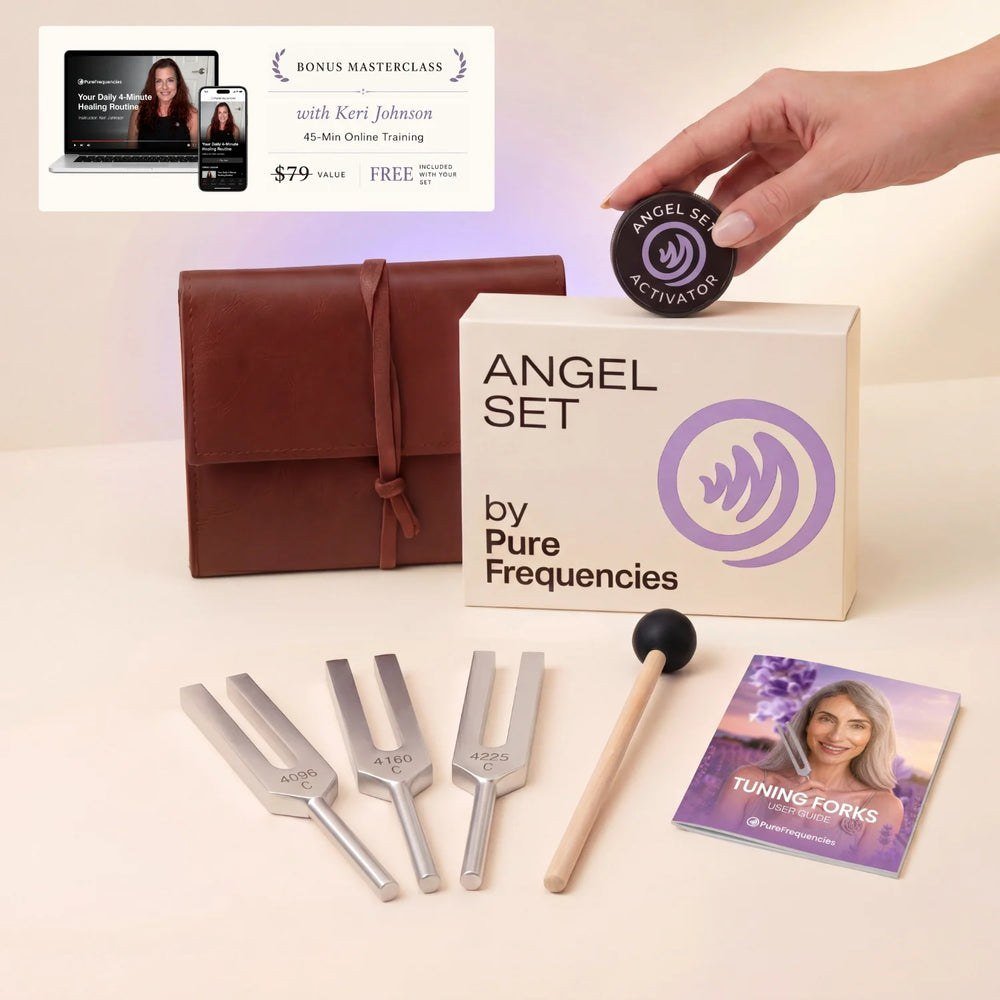
Lowest-cost entry
Angel Tuning Fork Set (3 forks) · $49.95
Three high-pitched forks (4096, 4160 and 4225 Hz) that are struck together for a bright, shimmering sound. Nice for opening or closing a session, less useful for body work.
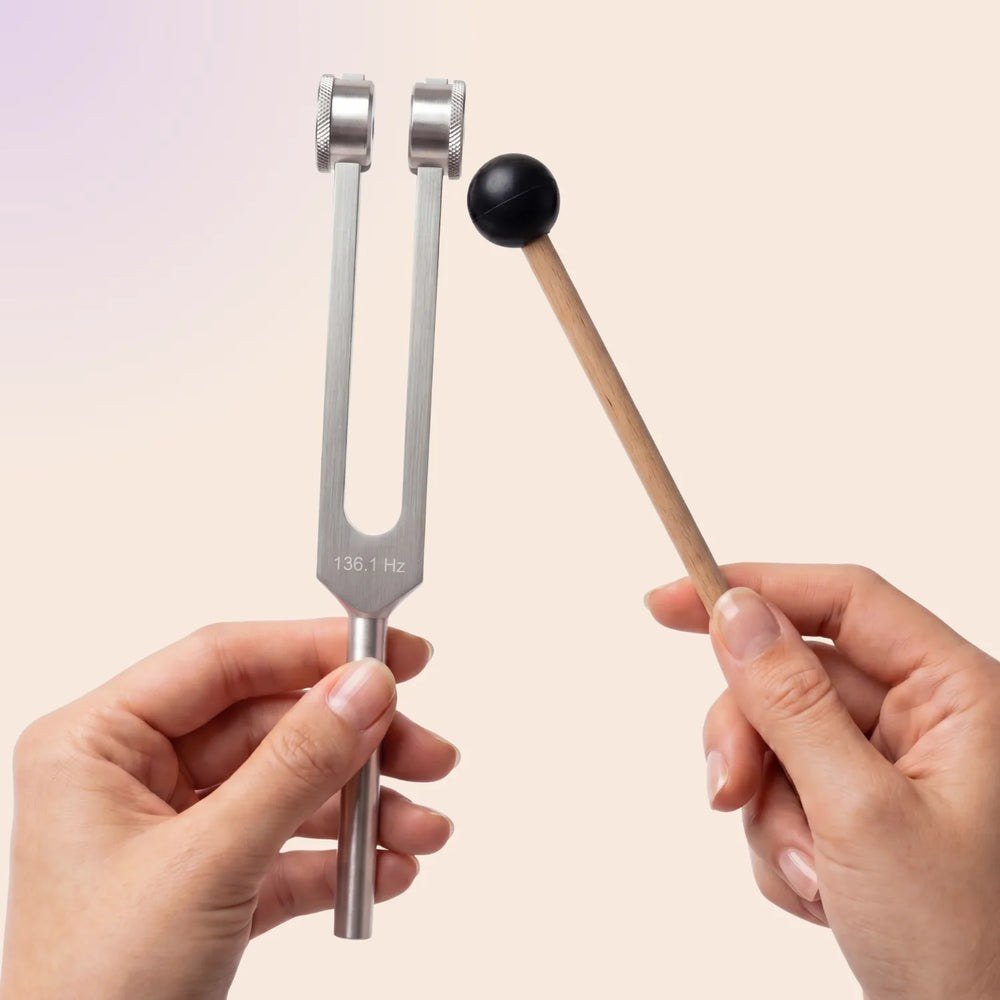
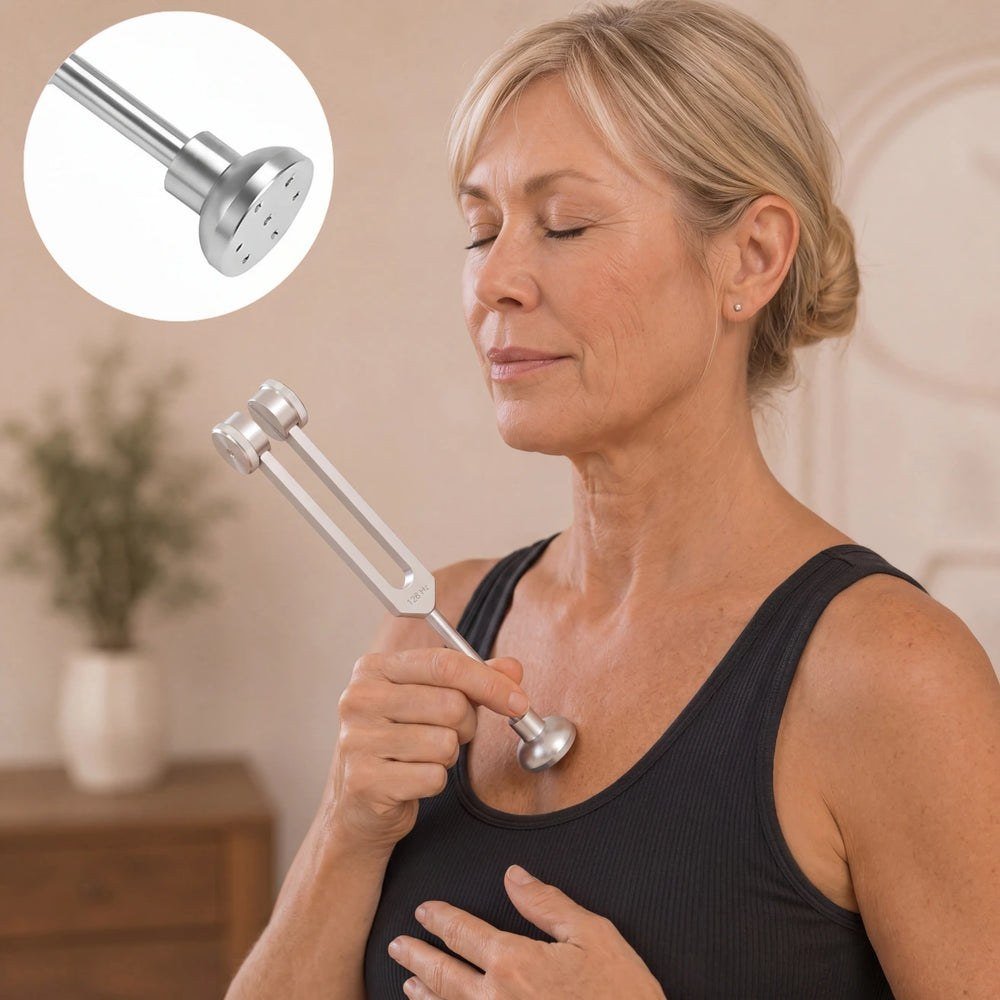
Product images: Pure Frequencies
A few things to know before you buy, based on the brand’s policies and independent reviews:
- Reviews: When we checked Trustpilot on 30 October 2026, the store held a 4.6 rating from 889 reviews. Common complaints were slow delivery, short fork stems and small print in the booklet.
- Returns: 60 days, and used items are accepted. You pay the return shipping, and the original shipping is not refunded.
- Shipping: Up to 2 business days to process (up to 4 for standard), then roughly 4–10 business days to the US. Buyers pay any import duties.
- Claims: Some brand marketing links specific frequencies to physical healing. As covered above, the research does not support those claims yet, so buy it as a relaxation tool.
If you want the full breakdown of build quality, pros and cons, and how it compares to cheap marketplace forks, read our Pure Frequencies Harmony Set review.
What each set costs with 10% off
| Set | Price (USD) | With 10% off |
|---|---|---|
| Harmony Tuning Fork Set (4 forks) | $109.95 | $98.95 |
| Serenity Tuning Fork Set (3 forks) | $79.95 | $71.95 |
| Grounded Tuning Fork Set (2 forks) | $64.95 | $58.46 |
| Angel Tuning Fork Set (3 forks) | $49.95 | $44.96 |
| Vegan Leather Fork Case | $29.95 | $26.95 |
Prices were checked on the US store on 17 November 2026 and exclude shipping and any duties. Open the store through the button below and enter THANKYOU at checkout to see your final total.
Shop Pure Frequencies – 10% off with THANKYOU
Safety notes
- Keep forks a few inches from the ear. Never strike a fork and press it against the ear.
- Keep the volume of recordings moderate, especially with headphones.
- If you are pregnant, have an implanted medical device, or have a condition affected by sound or vibration, ask your doctor before placing vibrating tools on the body.
- If a session makes you feel dizzy, anxious or uncomfortable, stop and sit up slowly.
- Sound baths are a relaxation practice. They do not replace treatment for sleep disorders, anxiety, depression or pain.
Related reading
- HealFlux Frequency Device v4 Review: What It Does, What It Can’t & How to Save 10%
- IM8 Discount Code: BECKA10 for 10% Off IM8 Health (Tested November 2026)
- Tuning Fork Sound Healing: A Practical, Honest Guide for Beginners
- Pure Frequencies Reviews: An Honest Look at the Harmony Set
Sources (checked 17 November 2026): Goldsby TL, Goldsby ME, McWalters M, Mills PJ. “Effects of Singing Bowl Sound Meditation on Mood, Tension, and Well-being: An Observational Study.” Journal of Evidence-Based Complementary & Alternative Medicine, 2017; Pure Frequencies product pages (Harmony, Serenity, Grounded and Angel sets, accessories) and US prices; Pure Frequencies refund and shipping policies; Trustpilot profile for purefrequencies.com (checked 30 October 2026). Discount code provided through Pure Frequencies’s affiliate program.