

RayNeo Review 2026: GT Max, Air 4 Pro, X3 Pro & iO – Which AR Glasses Should You Buy?
Disclosure: This article contains one affiliate link. If you order through it, DailyPick Journal may earn a commission at no extra cost to you. Prices were checked on rayneo.com (US store, USD) on 17 November 2026.
Watching a 200-inch movie on a plane, gaming on a giant screen from your couch, or reading live translations right in front of your eyes: this is what RayNeo promises. Backed by TCL, RayNeo has become one of the most active brands in consumer AR glasses, with a lineup that now spans budget display glasses, cinema-grade wearables and full AI smart glasses.
In this guide we break down every current RayNeo model: the Air 3s Pro, Air 4 Pro, the new GT and GT Max, the X3 Pro AR glasses and the lightweight iO smart glasses. We compare specs, real-world strengths and weaknesses reported by independent testers, and tell you exactly which pair is worth your money.
Quick verdict
- Best overall: RayNeo GT Max, for the biggest and most immersive virtual screen
- Best value: RayNeo Air 3s Pro, bright 120Hz Micro-OLED glasses at a budget price
- Best for movie lovers on a budget: RayNeo Air 4 Pro, with HDR10 and Bang & Olufsen audio
- Best AI glasses for everyday wear: RayNeo iO, at just 33 g
What Is RayNeo?
RayNeo is the AR glasses brand incubated by TCL, the global TV and display maker. That display heritage shows: RayNeo glasses use Micro-OLED panels, custom display chips and TV-style picture processing that many smaller rivals cannot match.
The lineup splits into three families:
- Display glasses (Air and GT series): plug into your phone, laptop, Steam Deck or Nintendo Switch 2 via USB-C and project a giant virtual screen. Think of them as a wearable monitor or private cinema.
- AR + AI glasses (X3 Pro): standalone glasses with cameras, a full-color waveguide display and on-board AI for navigation, translation and more.
- Smart glasses with a HUD (iO): ultra-light everyday glasses that show notifications, captions and AI answers in a small heads-up display.
RayNeo has also partnered with big names: Bang & Olufsen tunes the audio on the Air 4 Pro and GT series, and the GT series supports Dolby Vision playback when paired with RayNeo’s Pocket TV Pro streamer.
RayNeo Lineup Compared (2026)
Here is how the current RayNeo models stack up. Prices are list prices at the time of writing; RayNeo frequently runs launch offers and sales, so check the store for the latest price.
| Model | Type | Display | Field of view | Max virtual screen | Brightness | Weight | List price |
|---|---|---|---|---|---|---|---|
| Air 3s Pro | Display glasses | 1080p Micro-OLED, 120Hz | 47° | 201″ | 1,200 nits | 76 g | $299 |
| Air 4 Pro | Display glasses | Micro-OLED, HDR10, up to 120Hz | n/a | 201″ | 1,200 nits | 76 g | $299 ($319 Batman Edition) |
| GT | Cinematic display glasses | 1080p Micro-OLED, 120Hz, Dolby Vision* | 46° | 231″ | 1,200 nits | 68 g | $329 |
| GT Max | Cinematic display glasses | 1080p Micro-OLED, 120Hz, Dolby Vision* | 59° | 307″ | 1,200 nits | 78 g | $429 |
| X3 Pro | AR + AI glasses | Full-color micro-LED waveguide, 60Hz | 30° | Overlay | Up to 6,000 nits peak | 76 g | $1,299 |
| iO | AI smart glasses | Monochrome green waveguide HUD | 23.5° | Overlay | 1,300 nits | 33 g | $499 |
*Dolby Vision playback requires the RayNeo Pocket TV Pro, sold separately.
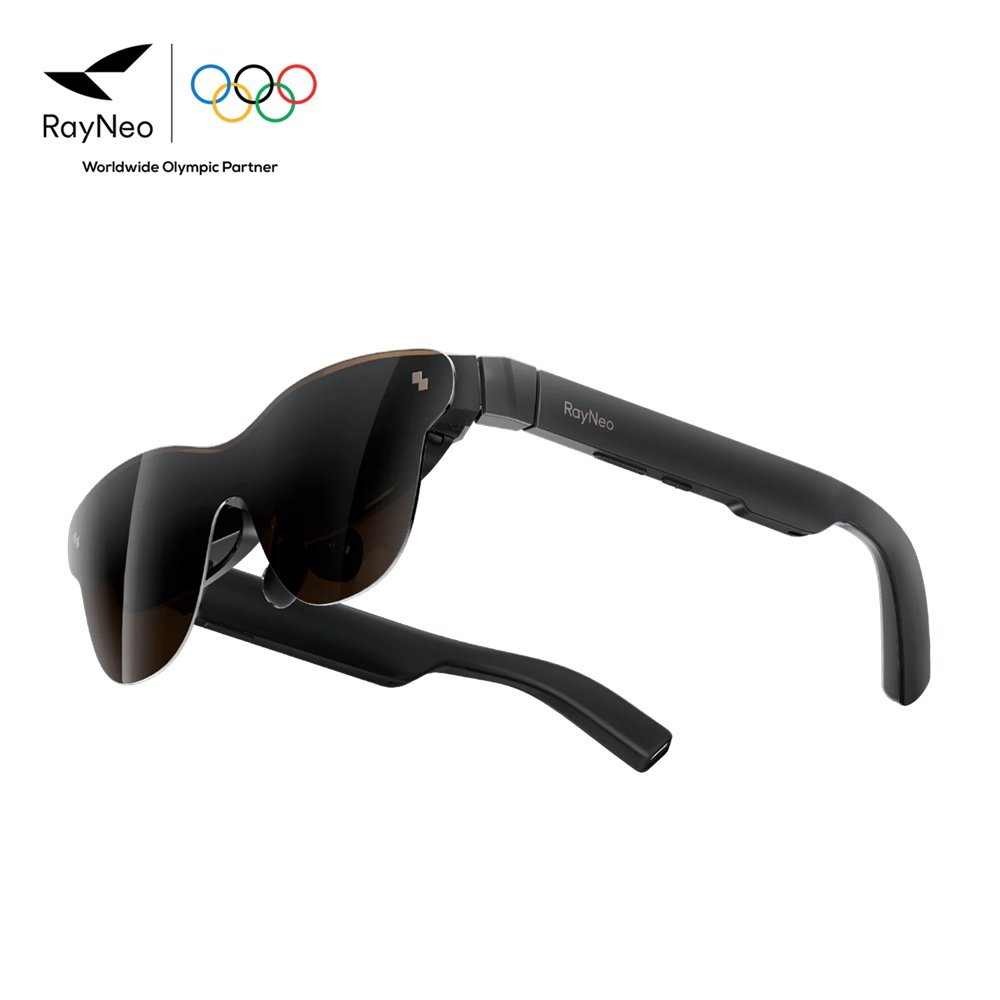
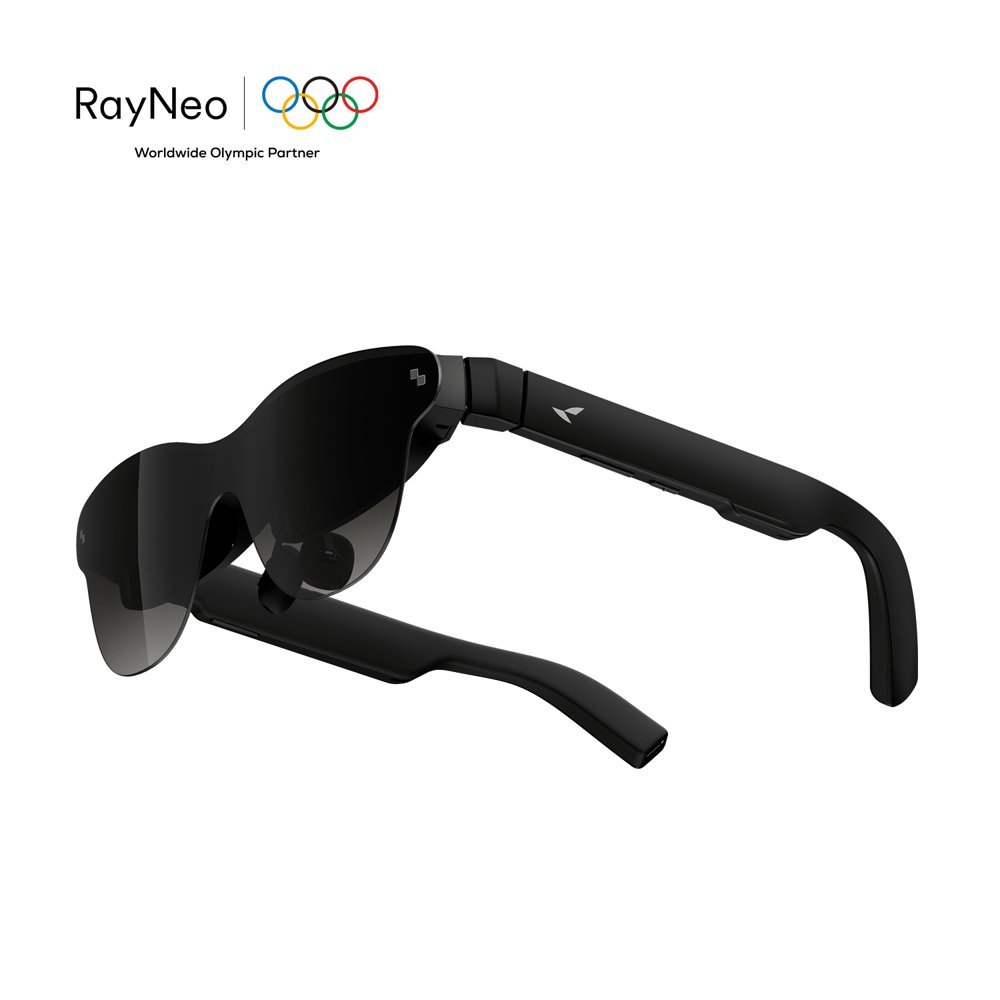
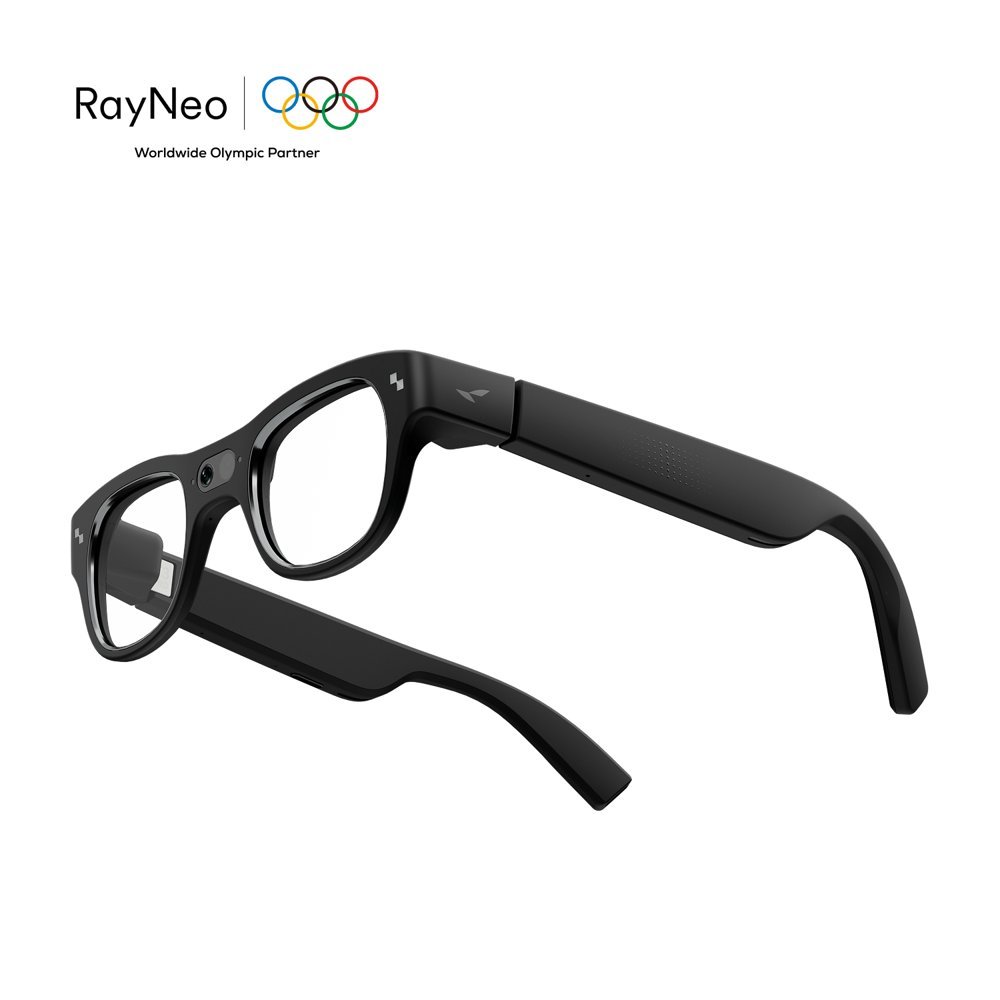
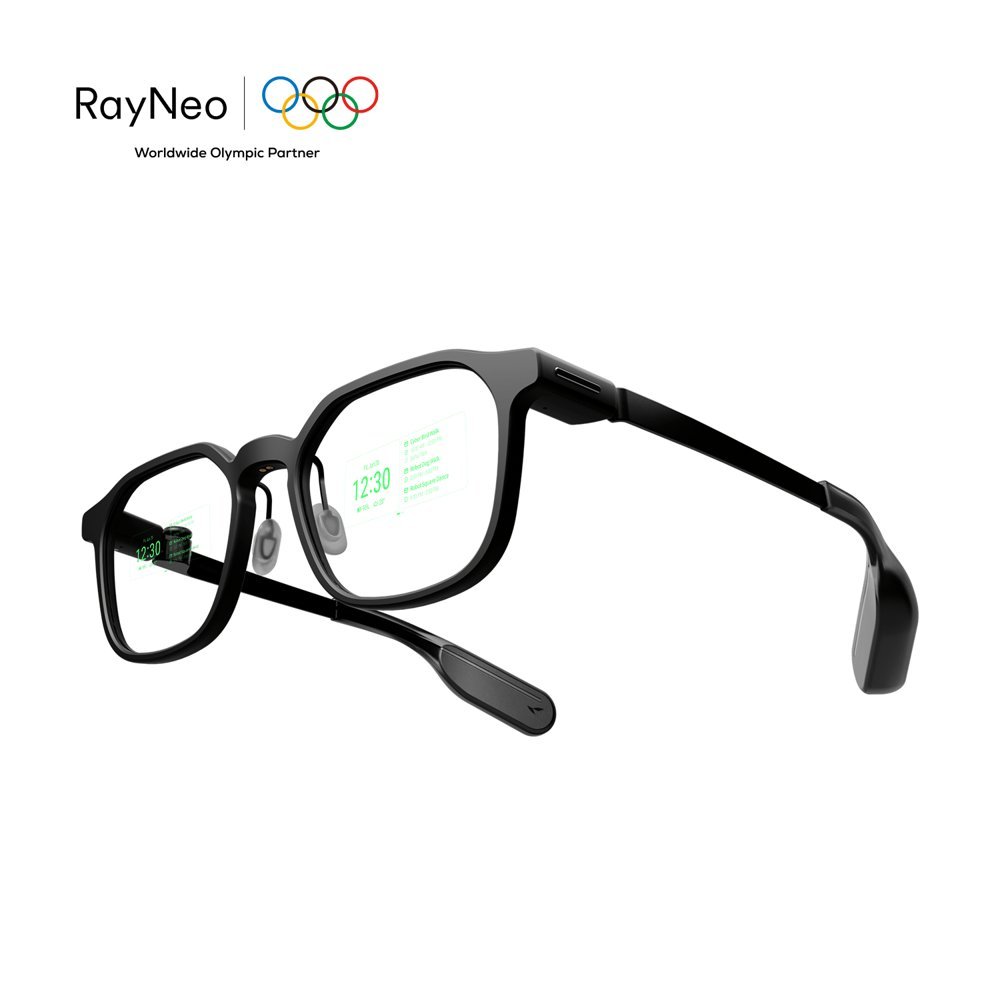
Product images: RayNeo (US prices on rayneo.com, 17 November 2026)
RayNeo GT Max Review: The New Flagship Cinema
The GT Max is the headline launch of RayNeo’s autumn 2026 lineup and the model we would point most movie and gaming fans toward. Its 59° field of view is one of the widest in consumer display glasses, and it can project a virtual screen of up to 307 inches.
Display and Picture Quality
Under the hood, the GT Max uses a 0.6-inch 1080p Micro-OLED panel driven by RayNeo’s Vision 4000 display chip and the new Peacock Optical Engine 3.0 Max. On paper, the picture specs are excellent: 120Hz in 2D, a 200,000:1 contrast ratio, 98% DCI-P3 color coverage and a color accuracy (ΔE) under 2. Peak brightness reaches 1,200 nits.
The trade-off of a wider view is sharpness. Because the same 1080p panel is stretched across a bigger field of view, the GT Max delivers about 38 pixels per degree versus 49 on the standard GT. In plain terms, the GT Max feels more immersive, while the GT looks slightly crisper.
3DoF Tracking and Viewing Modes
Unlike the Air series, both GT models include a dedicated Zone 360 chip for native 3DoF head tracking. That unlocks three viewing modes:
- Pinned: the screen stays fixed in space as you turn your head, like a real TV on the wall
- Follow: the screen moves with you
- Steady: smooths out small head movements, ideal for travel
Note that Pinned mode lowers brightness to around 336 nits, so it works best in dimmer rooms.
Audio, Fit and Extras
Bang & Olufsen tuned the quad-speaker system, and a Whisper Mode helps reduce sound leakage in quiet places. An optional sound tube accessory ($19) directs audio closer to your ears. The GT Max comes in three IPD sizes (S, M and L) chosen at purchase, which is a smart move for image clarity, and prescription lens inserts are supported.
Pair it with the RayNeo Pocket TV Pro, a Google TV streaming puck with its own battery, and you get native Dolby Vision playback plus real-time AI SDR-to-HDR conversion. The GT series also offers AI 2D-to-3D conversion on recent iPhones and supported Android flagships.
Our take: The GT Max is the most complete RayNeo for entertainment. Pick the standard GT ($329, 68 g) if you value lighter weight and slightly sharper text, or the GT Max ($429) if immersion is the priority.
RayNeo Air 3s Pro Review: The Value Champion
If you want great AR display glasses without spending much, the Air 3s Pro is the easiest recommendation in the lineup. It uses dual 0.6-inch Micro-OLED displays at 1920 x 1080 per eye, up to 120Hz, with a 47° field of view and a virtual screen of up to 201 inches.
The big upgrade over the older Air 3s is brightness: it jumps from 650 to 1,200 nits, which makes a clear difference in bright rooms. Tom’s Hardware praised that brightness boost, its audio and its value at the $299 list price, and the glasses are often discounted below that during sales.
What to know before buying:
- No electrochromic dimming and no light blocker in the box
- No built-in head tracking, so the screen follows your head
- The frame feels more plasticky than premium rivals
- Prescription lens frame is included
Our take: For streaming, mobile gaming and working on a laptop in cramped spaces, the Air 3s Pro delivers most of the RayNeo experience at the lowest price.
RayNeo Air 4 Pro Review: HDR on a Budget
Launched in early 2026, the Air 4 Pro is RayNeo’s bid for the “best picture for the price” crown. Its key feature is HDR10 support, which RayNeo calls a first for AR glasses, plus AI upscaling that converts standard content to HDR. It also adds 2D-to-3D conversion and a Bang & Olufsen-tuned four-speaker system.
In Gaming Nexus’s review, the Air 4 Pro earned an 8 out of 10, with praise for its sharp, vivid picture, bright displays, easy-to-reach buttons and cooler running temperature. The reviewer also flagged a few limits:
- No 3DoF tracking and no adjustment for screen size or distance
- The image corners can be hard to see clearly for some faces
- HDR10 mode is capped at 60Hz; AI HDR and SDR run at 120Hz
- True HDR10 needs a compatible source, such as RayNeo’s Pocket TV or a Steam Deck
A limited Batman Edition ($319) adds a light shield, sound tubes and themed packaging.
Our take: Choose the Air 4 Pro over the Air 3s Pro if you watch a lot of HDR movies and want slightly better audio. If you want head tracking or a bigger screen, step up to the GT series.
RayNeo X3 Pro Review: A Glimpse of the AR Future
The X3 Pro is a very different product. Instead of mirroring your phone, it is a standalone AR computer on your face, powered by a Qualcomm Snapdragon AR1 Gen 1 chip with 4GB RAM and 32GB storage. A full-color micro-LED waveguide display overlays information on the real world, and dual front cameras enable 6DoF tracking.
Its strengths are real-time translation, navigation and AI assistance in a design light enough to wear like normal glasses. Tom’s Hardware liked the display quality and the translation and navigation features. However, it also criticized the high price ($1,299 list), awkward touch controls and very short real-world battery life, which it measured at roughly an hour of general use versus RayNeo’s 5-hour claim.
Our take: The X3 Pro is for early adopters and developers who want to experience true AR today. Most shoppers will be better served by the GT series for entertainment or the iO for everyday AI help.
RayNeo iO Review: Lightweight AI Glasses for Everyday Life
The iO launched in September 2026 and targets people who want smart glasses they can wear all day. At just 33 g, it is far lighter than the display glasses above. A monochrome green heads-up display, rated at 1,300 nits, shows:
- Notifications, calendar, weather and navigation cues
- Live captions and translation in 55 languages via Timekettle’s engine
- A hands-free teleprompter for presenters and creators
- AI answers, with optional model choice between Gemini, ChatGPT, Claude and DeepSeek
- Voice recording with AI summaries and action items
The iO uses bone conduction audio with a four-mic array, connects via Bluetooth 5.4, is Apple MFi licensed and carries an IP54 rating. RayNeo claims up to two days of typical use from its 240 mAh battery.
Our take: The iO is not for watching movies. It is a productivity tool for meetings, travel and multitasking. Battery and real-world AI accuracy are the things to watch as more long-term reviews arrive.
Which RayNeo Should You Buy?
| If you want… | Buy this | Why |
|---|---|---|
| The most immersive movies and gaming | RayNeo GT Max | 59° FOV, up to 307″ screen, 3DoF, Dolby Vision support |
| A premium cinema experience that’s lighter and sharper | RayNeo GT | 68 g, 49 PPD, same chip and audio as the GT Max |
| The best value under $300 | RayNeo Air 3s Pro | 1,200 nits, 120Hz Micro-OLED, frequent discounts |
| HDR movies on a budget | RayNeo Air 4 Pro | HDR10, AI HDR, B&O audio |
| A big screen for Steam Deck or Switch 2 | Air 3s Pro or Air 4 Pro | Plug-and-play USB-C, low latency, light weight |
| Translation, captions and AI on the go | RayNeo iO | 33 g, all-day battery claim, multi-LLM support |
| True standalone AR to experiment with | RayNeo X3 Pro | Full-color waveguide, cameras, Snapdragon AR1 |
Compatibility: What Can You Connect?
All RayNeo display glasses (Air and GT series) connect via USB-C to any device that supports video output (DisplayPort Alt Mode). That includes:
- iPhone 15, 16 and 17 series and most recent USB-C iPads
- Android phones with DisplayPort output (many Samsung Galaxy and other flagship models)
- Windows laptops and MacBooks with USB-C video
- Steam Deck, ROG Ally, Legion Go and Nintendo Switch 2
For older Lightning iPhones, PS5, Xbox or HDMI devices, you will need an adapter. Always check that your phone supports video output over USB-C before buying.
Pros and Cons of RayNeo
What we like
- TCL-backed display tech with bright, high-contrast Micro-OLED panels
- Wide range of models from budget to cutting-edge AR
- Premium audio partnerships with Bang & Olufsen
- Dolby Vision and HDR10 support on newer models
- Prescription lens support across most of the lineup
- Competitive pricing with frequent sales
What could be better
- Air series lacks built-in head tracking
- Light blockers and premium cases are not always included
- Some features need extra accessories, such as the Pocket TV Pro
- The X3 Pro is expensive and its battery life is short in real use
RayNeo has one of the strongest and most complete AR glasses lineups in 2026. The GT Max is the model to get for a true private cinema, the Air 3s Pro offers outstanding value, and the Air 4 Pro brings HDR to a budget price. For everyday AI assistance, the featherweight iO is one of the most interesting smart glasses of the year.
Whatever your budget, there is a RayNeo that fits, and TCL’s display expertise means you get picture quality that punches above its price.
Where to buy RayNeo and how to pay less
RayNeo sells through Amazon and other retailers, but the official store has a few advantages worth knowing about. According to RayNeo’s policies (effective 11 November 2026), orders from rayneo.com to the US, Canada, Australia and Hong Kong ship free, and RayNeo covers import duties and customs fees. Europe, the UK and Japan have their own regional stores.
- 30-day trial: you can return or exchange eligible products within 30 days of delivery for a refund of the amount paid, with no restocking fee and free standard return shipping. Custom prescription orders are excluded from change-of-mind returns.
- 30-day price protection: if the same product drops to an eligible lower price on the store where you bought it, you can claim the difference within 30 days of your order. That matters because RayNeo runs frequent sales.
- Bundles: the Air 4 Pro was $299 on its own, $319 with a USB-C bundle, $339 with an HDMI adapter, $349 with the JoyDock for Switch and $379 with the Pocket TV. If you plan to connect an older device or a console, a bundle is usually cheaper than buying accessories separately (Pocket TV Pro $199, HDMI-C adapter $64, JoyDock $89 on their own).

Product image: RayNeo
We did not find a working public discount code for RayNeo at the time of writing; the best savings come from sales, bundles and the price-protection policy. Open the official store through the button below to see current prices for your region.
Related reading
- How to Block Websites on Home WiFi (Every Device, Without Easy Loopholes)
- Carista Review: What the EVO Scanner and PRO App Actually Do?
- SONOFF Review 2026: MINI DUO Explained + Complete Smart Home Lineup
- Pocket AI Review (2026)
Sources (checked 17 November 2026): RayNeo US store product pages and prices (Air 3s Pro, Air 4 Pro, GT, GT Max, X3 Pro, iO, bundles and accessories); RayNeo shipping, returns and price protection policies (effective 11 November 2026); RayNeo product specifications for field of view, screen size, brightness and weight.