
Tuning Fork Sound Healing: A Practical, Honest Guide for Beginners
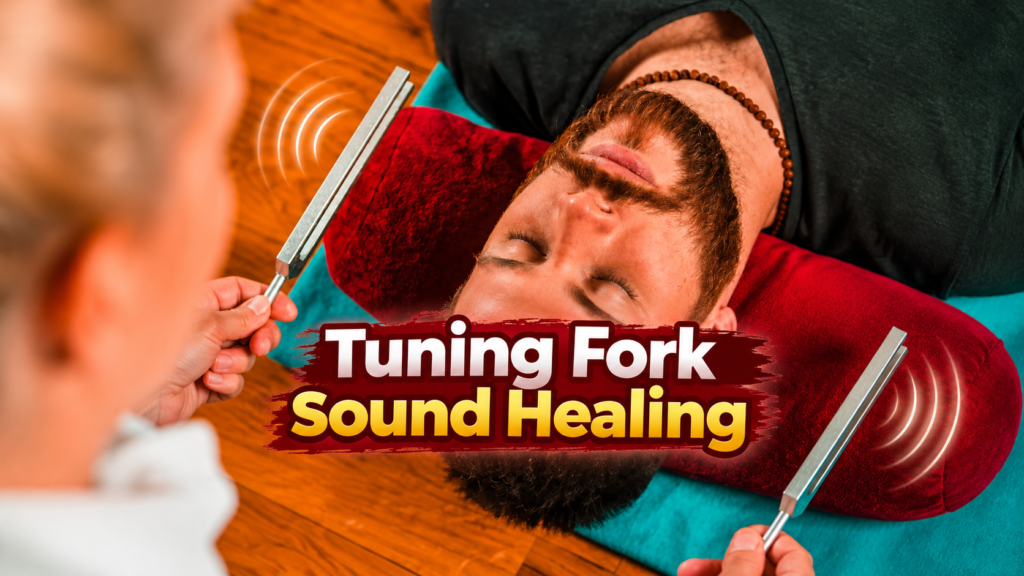
Tuning fork sound healing uses precisely tuned metal forks to create vibration and pure tones. You either place a vibrating fork on the body or hold it near the ears. Practitioners use it to help the body relax, ease muscle tension and settle the mind before sleep or meditation. The research on tuning forks specifically is still thin. But sound-based relaxation in general has encouraging early evidence, and the practice is simple, low-cost and easy to try at home.
If you want to try it with a complete beginner set, the Pure Frequencies Harmony Set includes both weighted and unweighted forks, and code THANKYOU takes 10% off.
Get 10% Off with Code THANKYOU
What Is Tuning Fork Sound Healing?
A tuning fork is a two-pronged metal instrument that vibrates at one fixed frequency when struck. Musicians use them for pitch. Doctors still use them in clinics: a 128 Hz fork checks vibration sense in the feet, and a 512 Hz fork is used in classic hearing tests.
Sound healing borrows the same tool for a different goal: relaxation and body awareness. A typical session involves striking a fork and either:
- Placing its stem on the body, such as on a tight shoulder, the sternum, or a bony point like the knee or ankle, so you feel the vibration travel through tissue; or
- Holding it a few inches from each ear, so you hear a clean, sustained tone that gives the mind something simple to focus on.
Much of the modern practice traces back to practitioners like Dr. John Beaulieu, whose work popularized tuning fork protocols in the late 20th century. One reason forks became popular is durability: once properly made, a fork holds its frequency for years.
Curious what a beginner kit looks like? See the four forks in the Harmony Set; code THANKYOU gives you 10% off.
How Tuning Fork Therapy Works
Tuning fork therapy works through two channels: touch and hearing.
Vibration through the body (weighted forks)
Weighted forks have round discs on the ends of the prongs. The weights slow the vibration and make it stronger and longer-lasting, so you feel more than you hear. Placed on a muscle or joint, the fork produces a gentle buzzing sensation, similar to a very light, very precise massage tool. Many people find this calming in the same way slow, rhythmic touch is calming.
Sound through the ears (unweighted forks)
Unweighted forks have plain prongs. They ring with a clearer, longer tone and are mostly used near the ears. Listening to a pure, fading tone works like a focus anchor in meditation. As the sound fades, your attention naturally follows it into stillness. Two forks played together, one at each ear, create an interval that many people find pleasant and settling.
What tuning forks don’t do is “fix” frequencies in your cells or repair DNA, despite what some websites claim. The honest description is that they are a structured way to trigger the body’s relaxation response.
The Pure Frequencies Harmony Set gives you both methods in one box. Use code THANKYOU at checkout for 10% off.
What Does the Research Say?
Here is the evidence picture, without the hype:
| Claim | Evidence level | What we know |
|---|---|---|
| Sound meditation can reduce tension and improve mood | Early but encouraging | An observational study of 62 adults found significant drops in tension, anger, fatigue and depressed mood after singing bowl sound meditation (Goldsby et al., 2017). It had no control group and studied bowls, not forks. |
| Tuning forks are precise, reliable vibration sources | Established | Clinicians routinely use 128 Hz and 512 Hz forks for neurological and hearing exams. |
| Gentle vibration on muscles feels relaxing | Plausible, widely reported | Consistent with how people respond to massage and vibration tools. Fork-specific trials are limited. |
| Specific frequencies cure pain, anxiety or disease | Not established | No large, controlled human trials support treatment claims for any specific fork frequency. |
| 528 Hz “repairs DNA” | Unsupported | This is a popular internet claim with no credible evidence. |
The practical takeaway: treat tuning forks as a relaxation and mindfulness tool. Expect to feel calmer and more aware of your body, not to replace medical care. That realistic expectation is also why many people end up using them daily: the routine is short and pleasant.
Want to test it for yourself without much risk? Pure Frequencies offers a 60-day money-back guarantee, and you can start with the Harmony Set here using code THANKYOU.
Weighted vs. Unweighted Tuning Forks
| Feature | Weighted forks | Unweighted forks |
|---|---|---|
| Design | Discs on the prong tips | Plain prongs |
| Main sensation | Strong, felt vibration | Clear, ringing tone |
| How you use it | Stem placed on muscles, joints, bony points | Held 2–4 inches from the ears or around the body |
| Common goals | Physical tension, grounding, body awareness | Meditation, focus, calming a busy mind |
| Typical frequencies | 128 Hz, 136.1 Hz | 256 Hz, 384 Hz, 512 Hz and up |
| Best for | People who like massage-style relief | People who prefer listening and breathwork |
Most beginners benefit from having at least one of each. That way you can find out whether you respond more to touch or to sound before you spend more.
That’s exactly how the Harmony Set is built: two weighted forks and two unweighted ones. Code THANKYOU saves 10%.
The Most Common Healing Frequencies Explained
You’ll see dozens of frequencies online. These four show up most often in beginner sets, and each has a clear practical use:
| Frequency | Type | Where it comes from | How practitioners use it |
|---|---|---|---|
| 128 Hz | Weighted | A low C; the same pitch clinicians use for vibration testing | On tight muscles, joints and bony points for a strong, soothing buzz |
| 136.1 Hz | Weighted | The “Om” or Earth-year frequency, a tradition rooted in Hans Cousto’s “cosmic octave” | On the sternum or feet for grounding before meditation |
| 256 Hz | Unweighted | A C note, an octave above 128 Hz | Near the ears to start a listening meditation |
| 384 Hz | Unweighted | A G note; forms a perfect fifth (3:2 ratio) with 256 Hz | Played with 256 Hz, one at each ear, for a pleasing, balanced interval |
Two honest notes. First, the stories attached to frequencies, such as “Earth’s Om” or chakra links, are traditions, not physiology. Second, the 3:2 perfect fifth is real music theory: it’s one of the most consonant intervals, which is why many people find it naturally calming.
If you want these four exact frequencies, the Pure Frequencies Harmony Set covers all of them. Code THANKYOU gives you 10% off.
How to Use Tuning Forks for Healing at Home
A simple 10-minute routine
- Settle in (1 minute). Sit or lie down somewhere quiet. Take five slow breaths with a longer exhale than inhale.
- Ground with 136.1 Hz (2 minutes). Strike the weighted fork with a rubber activator or against your knee. Never strike it on a hard surface. Place the stem on your sternum, then on the top of each foot, for 30–60 seconds each.
- Release tension with 128 Hz (3 minutes). Strike and place the stem on a tight area: base of the skull, tops of the shoulders, along the spine or on the knees. Hold for 30–60 seconds, then re-strike and move.
- Listen with 256 Hz and 384 Hz (3 minutes). Strike both unweighted forks and hold them 2–4 inches from your ears, one on each side. Breathe slowly and follow the tone as it fades. Repeat 3–5 times.
- Rest (1 minute). Sit quietly and notice how your body feels before getting up.
Tips for better results
- Consistency beats intensity. Five to ten minutes daily works better than one long session a week.
- Pair it with breath. Slow exhales amplify the calming effect.
- Use it before bed. Many people make the listening step part of a wind-down routine.
- Hold the stem, not the prongs. Touching the prongs stops the vibration.
- Keep a short note. Track sleep, tension and mood for two weeks to see what actually changes for you.
If you’d like guidance, the Harmony Set comes with a printed placement guide and an online masterclass. Get yours here and enter THANKYOU for 10% off.
Safety: Who Should Be Careful
Tuning forks are low-risk for most people, but use common sense:
- Pacemakers and implants: Don’t place forks directly over a pacemaker, insulin pump or other implanted device.
- Recent surgery or injury: Avoid fresh incisions, fractures, open wounds and acutely inflamed areas.
- Pregnancy: Avoid placing weighted forks on the abdomen. Ask your provider first.
- Hearing: Keep forks a few inches from your ears; never touch the prongs to the ear.
- Medical conditions: Tuning forks are not a substitute for diagnosis or treatment of pain, anxiety, insomnia or any other condition. If symptoms are persistent or severe, see a professional.
Some people feel briefly lightheaded or emotional during a session as they relax. Sit up slowly and drink water afterward.
Used sensibly, forks are one of the gentlest wellness tools you can own. When you’re ready, order the Harmony Set with code THANKYOU.
How to Choose a Tuning Fork Set
Cheap forks are everywhere, but quality matters more than with most wellness gadgets. A fork that is out of tune, or that stops ringing after a few seconds, defeats the purpose. Look for:
- Stated frequency accuracy. Reputable brands publish a tolerance, such as ±0.5%.
- Material and finish. Machined aluminum alloy forks ring longer and hold their tune better than flimsy cast forks.
- Both fork types. A mix of weighted and unweighted forks lets you explore both methods.
- An activator. A rubber mallet or puck gives a clean strike without damaging the fork.
- Learning materials. A placement guide or course shortens the learning curve.
- Return policy. Because results are personal, a generous trial period matters.
The set that ticks every box on this list for beginners is the one below. Check its current price and apply THANKYOU for 10% off.
Our Pick for Beginners: Pure Frequencies Harmony Set
The Pure Frequencies Harmony Set is a four-fork starter kit that covers both methods described in this guide.
| Forks | 128 Hz and 136.1 Hz (weighted); 256 Hz and 384 Hz (unweighted) |
|---|---|
| Build | CNC-machined aluminum alloy; brand states ±0.5% frequency accuracy |
| Included | Leather carrying case, activator mallet and puck, printed placement guide, online “Feel to Heal” masterclass, 1-year warranty |
| Price | $109.95 at the time of writing (listed at $149.80) |
| Guarantee | 60-day money-back guarantee |
| Shipping | Free on orders over $45; ships within 1–3 business days |
| Customer rating | 4.8/5 from 12,500+ reviews on the brand’s site |
Why it’s a good starting point: You get the four frequencies most beginner routines use, a proper activator and a guide in one box. Buying them individually usually costs more. The 60-day guarantee also lets you find out whether fork work suits you before you commit.
What to keep in mind: Pure Frequencies’ marketing makes strong claims, such as nitric oxide release and bone density support. Those claims rest on limited early research and are not established by large human trials. Buy it as a relaxation tool, and you’re likely to be happy with it.
How to get 10% off:
- Visit Pure Frequencies through this link.
- Add the Harmony Set, or any set, to your cart.
- Enter code THANKYOU at checkout.
- Confirm the discount before paying. If a sitewide sale is running, check which gives the lower total.
Claim 10% off the Harmony Set with code THANKYOU →
FAQs
Does tuning fork sound healing really work?
It reliably helps many people relax, and sound meditation in general shows encouraging early results for tension and mood. There is no solid evidence that it cures medical conditions.
What frequency tuning fork is best for beginners?
A 128 Hz weighted fork is the easiest to feel and is very versatile. Pairing it with 256 Hz and 384 Hz unweighted forks lets you try listening-based sessions too.
How long should a tuning fork session last?
Five to fifteen minutes is plenty. Daily short sessions usually work better than occasional long ones.
Can I use tuning forks on myself?
Yes. Self-use is simple: strike, place or listen, and breathe. A placement guide helps at the start.
Are tuning forks safe?
For most people, yes. Avoid pacemakers and implants, recent surgical sites and the abdomen during pregnancy, and keep forks a few inches from your ears.
Is there a Pure Frequencies discount code?
Yes. Use code THANKYOU through our Pure Frequencies link for 10% off.
Final Thoughts
Tuning fork sound healing is best understood as a simple, tactile way to relax. You get a vibration you can feel, a tone you can follow, and a few calm minutes in a busy day. Keep your expectations realistic, use it consistently, and pair it with good sleep, movement and medical care when needed. You may find it becomes one of the easiest wellness habits you keep.
If you’re ready to start, the Pure Frequencies Harmony Set is a well-rounded first kit. Use code THANKYOU to save 10% on your order.
Individual results vary. Tuning forks are not intended to diagnose, treat, cure or prevent any disease. Consult a qualified healthcare provider for medical concerns.